
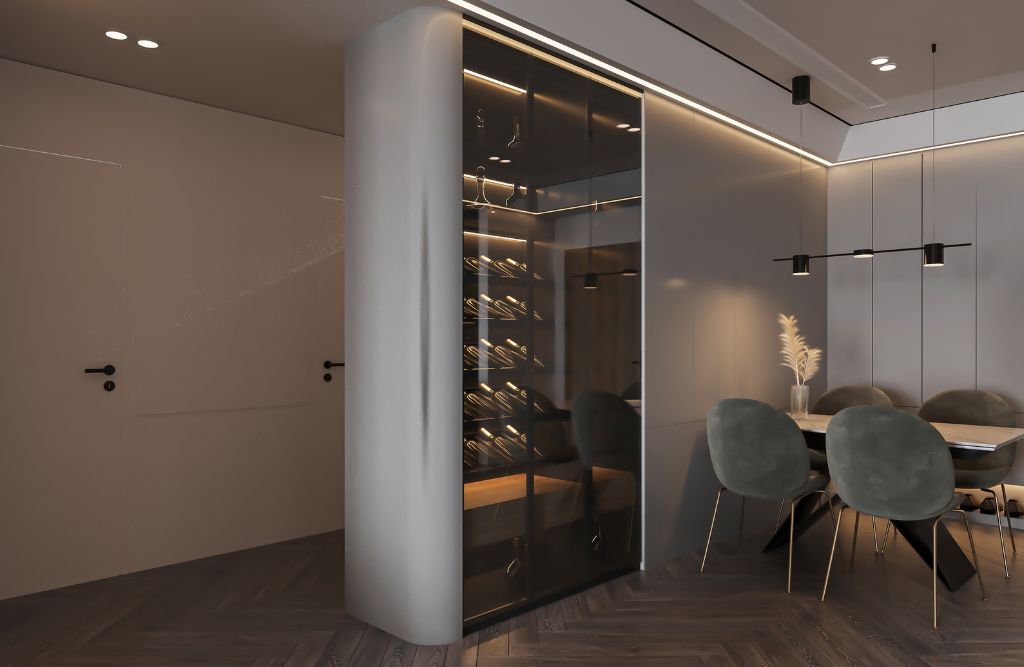
Your home might already have the perfect spot for a wine cellar. It could be the awkward space beneath the staircase, a forgotten closet, or that spare corner in the basement you keep promising to do something about. Instead of letting it collect dust, why not turn it into something worth showing off?
With the right planning, even an overlooked corner can become a beautiful addition to your home. Luxury wine racks are just one part of the picture. Let’s uncork how temperature control, smart storage, and design that suits your home all matter just as much.
Hidden Wine Cellar Ideas – Look Beyond the Basement
You don’t need a sprawling basement to create a wine cellar. Some of the most interesting home wine cellars in Spring or Woodlands begin with spaces homeowners barely notice.
- Under-stairs wine cellar
That triangular space beneath your staircase is ideal for fitted racks. Add a glass door and subtle lighting to turn an awkward nook into a striking feature. Measure the sloping ceiling carefully to avoid wasting valuable storage space.
- Cellar behind a bookshelf
Want a little mystery with your Merlot? A concealed door disguised as a bookcase can lead to a compact wine room. Just ensure the door seals properly and allows easy access to the cooling system.
- Spare closet makeover
A rarely used closet can become a small space wine cellar with fitted racks, insulated walls, and suitable climate control. It’s especially practical if you want a dedicated collection without sacrificing an entire room.
Choose Storage That Fits Your Wine Collection
Before choosing a finish, count your bottles. Are you storing a few favorites for dinner parties, or collecting wines you intend to age for years? Your answer determines the rack layout, storage capacity, and level of climate control you need.Consider these options:
- Custom wood wine racks: Redwood, mahogany, and oak can complement traditional interiors and warm-toned cabinetry.
- Label-forward displays: These make it easier to identify bottles without pulling them out.
- Bin storage: Useful for grouping everyday bottles or storing several bottles of the same wine.
- Mixed layouts: Combine individual bottle racks with case storage to accommodate a growing collection.
Don’t Skip Climate Control
Here’s where your dream project needs a little practical thinking. Wine doesn’t care how gorgeous its surroundings are if the temperature keeps changing.
The University of Georgia Cooperative Extension recommends storing wine at a steady 60°F. For long-term storage, aim for consistent conditions, limited light exposure, and appropriate humidity.
Before building, consider these essentials:
- Insulation: Walls, ceilings, and doors must help maintain stable conditions.
- Cooling: Choose a unit sized for your room, insulation, and local climate.
- Humidity: Monitor moisture to protect corks, labels, and wooden fittings.
- Lighting: Use low-heat LED fixtures and limit direct sunlight.
- Ventilation: Plan for the cooling unit’s heat exhaust and airflow requirements.
Add Luxury Without Overcrowding the Room
Luxury home wine rooms in Cypress or Houston, Texas, don’t need chandeliers, marble floors, and enough bottles to supply a restaurant. Sometimes, restraint makes the bigger impression.
Try combining natural wood with glass panels, or pair metal accents with warm, neutral walls. If the space is tight, vertical racks can maximize capacity without eating into the floor area.
You could also include a small counter for opening bottles, a tasting ledge, or a couple of comfortable chairs just outside the cellar. Keep these extras proportional to the available space. Your wine room should be somewhere you enjoy visiting, not an obstacle course with expensive glassware.
Plan Before You Build
Before committing to your custom wine storage, work through this checklist:
- Measure the available space, including ceiling height and door clearance.
- Estimate your current collection and likely future needs.
- Decide whether you need long-term, climate-controlled storage or a display area for bottles you’ll drink soon.
- Check electrical requirements, cooling options, moisture protection, and maintenance access.
- Set a realistic budget for construction, racks, lighting, and equipment.
A detailed plan can prevent expensive changes later. Some projects may also require structural or electrical assessments. It’s better to contact expert wine cellar contractors, like Wine Cellars of Houston, for such home improvement projects.
A hidden wine cellar can be practical, beautiful, and surprisingly compact. You don’t need a mansion or a thousand bottles to make it worthwhile. You just need a good plan, thoughtful craftsmanship, and a space that makes you smile every time you reach for your favorite bottle.
FAQs
Can a home wine cellar be installed without a dedicated cooling unit?
Short-term storage of everyday table wine in a non-cooled space is fine if you consume the bottles within a few weeks, but fluctuating household temperatures will quickly degrade fine wines. If you’re converting an unused closet or under-stairs space into a proper cellar for long-term aging, investing in a specialized cooling system to maintain a stable 55°F and 60–70% humidity is essential to prevent premature spoilage.
Do custom wine rooms require special vapor barriers during construction?
Proper vapor barrier installation is crucial for any custom wine room to prevent warm, humid household air from meeting the chilled interior walls, which causes destructive condensation and mold growth behind the panels. Contractors typically install a continuous polyethylene vapor barrier behind the insulation and drywall to seal the environment completely before finishing the interior.
What is the best way to use the space underneath a staircase for wine storage?
Custom racking tailored to the decreasing ceiling height is the most efficient way to maximize under-stairs space. Mixing angled display rows for your favorite bottles with bulk storage bins near the lowest clearance points ensures zero wasted space while creating a striking architectural feature in your home.