
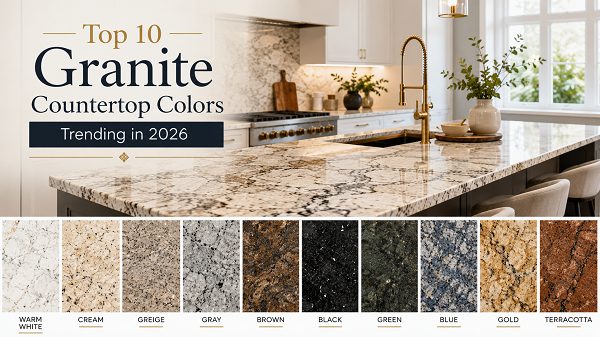
Choosing a countertop color can feel difficult because granite offers natural movement, mixed tones, and unique mineral patterns. However, the strongest 2026 designs are moving away from cold, flat kitchens and toward warmer, more personal spaces. In Milwaukee, homeowners are showing more interest in natural colors that pair well with wood cabinets, soft neutrals, deep accent shades, and mixed metal finishes. Current design reporting also points toward warm whites, earth tones, bold veining, rich browns, greens, blues, and dramatic dark surfaces.
What Is Shaping Granite Color Trends in 2026?
When I look at current kitchen designs, I see a clear move toward warmth and character. Pure white surfaces and all-gray rooms are no longer the only popular choices. Instead, homeowners are using creamy whites, warm beige, brown, gold, green, and black to make kitchens feel more inviting. Moreover, bold natural movement now appears on islands and other focal areas instead of covering every surface. When I compare the many colors granite countertops appear in, I focus on more than the base shade. I also look at undertones, mineral flecks, veining, cabinet colors, flooring, lighting, and the size of the room. Because granite is a natural material, each slab has its own pattern and color balance. Therefore, I always recommend viewing the full slab before making a final choice. Granite collections currently include white, cream, gray, black, brown, blue, green, gold, olive, and terracotta families, along with many mixed-color patterns. This top-ten list reflects broad design trends rather than a universal sales ranking. Availability can also change between suppliers because granite comes from natural stone blocks. Still, these color groups give homeowners a useful starting point for a kitchen remodel in 2026.
Key Takeaways
- Warm whites, creams, browns, and soft grays offer flexible choices that can remain attractive after current trends change.
- Black, green, blue, and gold-toned granite can create a stronger focal point, especially on a kitchen island.
- Cabinet samples, flooring, lighting, and the full granite slab should be compared together before placing an order.
1. Warm White Granite
Warm white granite remains one of the safest and most flexible choices for 2026. However, the newest white kitchens do not rely on harsh blue-white surfaces. Instead, homeowners are choosing softer backgrounds with cream, beige, gray, or gold movement. Granite options such as Colonial White, Andino White, Aspen White, Bianco Antico, and New River White can support this look. Each variety has a different balance of spots, veins, and mineral patterns, so the final appearance may range from quiet to dramatic. These and other white granite choices appear within major current slab collections. Warm white granite can brighten a smaller kitchen because it reflects light across the room. In addition, it can work with white, beige, sage, navy, gray, and natural wood cabinets. Therefore, it provides flexibility when the cabinet color may change later. For a calm design, I would pair warm white granite with light oak cabinets and brushed brass hardware. On the other hand, dark blue or forest green cabinets can create a stronger contrast. Either approach can feel modern without making the stone look overly trendy.
2. Cream and Soft Beige Granite
Cream and beige granite are returning because homeowners want kitchens that feel comfortable rather than cold. These shades can include warm white, sand, caramel, tan, brown, and soft gold minerals. Colonial Cream, Crema Atlantico, Crema Caramel, and Giallo Ornamental are useful examples of this family. Giallo Ornamental, in particular, is recognized for its warm cream base and brown mineral movement. Cream granite works especially well with warm wood cabinets. Oak, walnut, maple, and medium brown finishes can bring out the natural warmth within the slab. Moreover, cream surfaces often connect easily with beige tile, wood-look flooring, and bronze hardware. Although beige was once viewed as dated, the 2026 version feels more layered. The goal is not to cover the room in one tan color. Instead, designers mix cream stone with warm white walls, wood cabinets, handmade tile, and textured finishes.
3. Greige Granite
Greige combines gray and beige, which makes it easier to use than a very cool gray. It can connect warm wood, white cabinets, stainless steel appliances, black accents, and brass hardware within one design. Current 2026 reporting shows that gray has not disappeared. However, warmer and more detailed versions are replacing flat, cool-gray surfaces. Gray-beige tones and gray stone with brown or gold undertones now feel more current. Luna Pearl, Caledonia, Gray Mist, and some Colonial White slabs may support a greige palette, depending on the individual stone. Because natural granite varies, one slab may look warmer or cooler than another. I would use greige granite when the kitchen contains several finishes that need to work together. For example, it can connect white cabinets, medium wood flooring, stainless appliances, and black light fixtures without making any one feature feel out of place.
4. Warm Gray Granite
Warm gray granite offers a slightly stronger appearance than greige while still remaining neutral. It can include charcoal spots, taupe minerals, brown movement, or soft white sections. This color works well in modern kitchens because it creates contrast without becoming as heavy as black. In addition, warm gray can hide crumbs and small marks better than a plain white surface. Gray Mist, Azul Platino, Caledonia, and similar granite selections can create this effect. However, the full slab should be viewed under both natural and indoor light because gray stone can shift toward blue, beige, or green depending on its minerals. For a balanced look, I would pair warm gray granite with cream cabinets, medium wood cabinets, or muted green cabinetry. Light backsplashes can keep the room open, while black or bronze fixtures can add definition.
5. Rich Brown and Mocha Granite
Brown granite has returned in a more polished and thoughtful form. Instead of the heavy brown-on-brown kitchens seen in older designs, 2026 spaces mix chocolate, coffee, caramel, and bronze tones with lighter cabinets and simple finishes. Current countertop trend reports describe rich browns and warm tans as an important rising direction. These colors connect with the wider movement toward earthy, nature-inspired interiors. Coffee Brown, Desert Dream, and other mocha-toned stones can create depth without using solid black. Moreover, brown granite can complement wood cabinets rather than competing with them. White or cream cabinets can make a brown countertop feel fresh. Meanwhile, walnut cabinets can create a deeper and more dramatic design. To prevent the room from becoming too dark, I would include a light backsplash and strong task lighting.
6. Dramatic Black Granite
Black granite remains a strong choice for homeowners who want clear contrast and a bold focal point. Absolute Black creates a simple and even look, while Black Pearl adds subtle mineral movement. Black Galaxy includes bright flecks that can stand out under kitchen lighting. Current 2026 trend coverage identifies black countertops as a bold statement choice. However, designers often use them on an island or balance them with lighter cabinets so the kitchen does not feel too heavy. Black granite can look especially sharp with white, cream, or natural oak cabinets. In addition, it can support brass, polished nickel, or mixed-metal hardware. A light backsplash can provide contrast, while warm wood flooring can stop the design from feeling cold. Still, dark polished surfaces may show dust, fingerprints, and water marks. Therefore, homeowners should consider both the appearance and the cleaning routine before choosing a highly reflective black finish.
7. Deep Green Granite
Green granite connects the kitchen with nature and adds personality without relying on a bright artificial color. Deep forest tones, olive movement, and softer blue-green shades can all create a distinctive surface. Verde Butterfly and Costa Esmeralda are examples of granite choices that can support this trend. Current design reports also identify greens as an emerging countertop direction, especially when homeowners want more personal and nature-inspired kitchens. A green granite island can become the main feature in an otherwise neutral room. For example, it can work with cream perimeter counters, natural wood cabinets, and warm brass hardware. However, a strong green stone should have enough visual space. Too many competing patterns can make the kitchen feel busy. Therefore, I would keep the backsplash and surrounding cabinet finishes simple.
8. Blue Granite
Blue granite creates one of the most striking looks available in natural stone. Depending on the slab, it may include navy, silver, gray, black, white, or bright blue minerals. Blue Pearl, Azul Platino, Azul Celeste, and Blue Bahia represent different levels of color and movement. Blue Pearl often feels deep and polished, while Blue Bahia can create a much more dramatic statement. Blue and green natural stones remain part of the bolder design movement for 2026. Designers are seeing homeowners use these colors to express more personality, especially on islands and other focal surfaces. Because blue granite can carry a strong pattern, it often works best with white, light gray, or pale wood cabinets. Brushed nickel can support cooler blue tones, while brass can warm the overall design.
9. Gold-Toned Granite
Gold-toned granite can add warmth and movement without making the kitchen feel dark. These slabs may include cream, white, caramel, brown, gray, black, and gold minerals. Caravelas Gold, Ferro Gold, Giallo Ornamental, and some Bianco Antico slabs can support this direction. Current 2026 design reports also highlight gold movement and dramatic natural veining as popular choices. Gold granite can pair well with cream, white, dark green, black, and natural wood cabinets. In addition, it can connect easily with brass or bronze hardware. However, the cabinet undertones matters. A cool blue-white cabinet may fight against a very warm gold slab. Therefore, I would compare the cabinet door and stone together before approving the combination.
10. Burgundy and Terracotta Granite
Burgundy, rust, copper, and terracotta tones offer an earthy alternative to common white and gray surfaces. Although these colors are not the safest choice for every home, they can create a warm and memorable design. Current slab collections include terracotta and burgundy color categories, while broader 2026 kitchen trends show growing interest in earthy colors and richer natural palettes. This color family can work well in a kitchen with cream cabinets, dark wood, warm white walls, and bronze hardware. It may also suit a Mediterranean, rustic, traditional, or nature-inspired design. Because red and orange undertones can dominate a small room, I would use them carefully. A kitchen island may provide the right amount of color without making every surface feel intense.
How Cabinet Colors Affect Granite Selection
The countertop and cabinets cover large areas, so they must create balance. If both surfaces have strong patterns or dark colors, the kitchen may feel crowded. Therefore, one feature should usually lead while the other provides support. White cabinets can work with almost every granite family. However, the undertone still matters. Warm white cabinets often pair better with cream, gold, brown, and greige stone, while cooler white may suit gray, blue, and black granite. Natural wood cabinets work especially well with warm white, cream, black, green, and greige stone. Meanwhile, dark cabinets often benefit from lighter countertops that keep the room open. When comparing granite countertops milwaukee, I would bring a cabinet sample, flooring sample, paint color, and backsplash option to the showroom. This helps reveal whether the undertones work together under the same light.
Why Lighting Can Change the Granite Color
Granite may look different throughout the day. Natural daylight can reveal cool gray, blue, or green minerals, while warm indoor bulbs may highlight cream, brown, or gold tones. For this reason, a small sample may not provide enough information. The direction of the veins and the location of dark mineral areas can also affect the finished layout. A polished finish reflects more light and can make colors look stronger. In contrast, a honed finish creates a softer appearance. Therefore, the finish should support both the design and the amount of care the homeowner expects.
Should the Island Use a Different Granite Color?
A two-tone countertop design can add interest without making the entire kitchen bold. For example, warm white granite can cover the perimeter cabinets while black, brown, blue, or green granite creates a statement island. However, the two stones should share at least one related color. A white perimeter stone with subtle gray movement may pair well with a dark island that also contains gray minerals. The backsplash and cabinet colors should remain controlled when two countertop patterns appear in one room. Otherwise, too many visual features may compete for attention.
How to Choose a Color That Will Last
Trends can provide ideas, but the countertop should still suit the household. Granite can remain in a kitchen for many years, so the final decision should not depend only on what looks popular online. First, consider the room size and available light. Dark granite may look impressive in a large, bright kitchen, while warm white or cream can help a smaller room feel more open. Next, think about cleaning habits. A very dark polished surface may show dust and water spots, while a heavily patterned stone may hide crumbs more easily. Finally, view the full slab. Granite is a natural material, so every section may contain different movements. Choosing the actual slab also allows the fabricator to discuss seams, sink placement, edge profiles, and the best areas for an island or visible corner.
Final Thoughts
The leading granite countertop colors of 2026 show that kitchens are becoming warmer, more personal, and more connected to nature. Warm white, cream, greige, warm gray, brown, black, green, blue, gold, and terracotta all offer different ways to update a room. However, the best choice should match the cabinets, flooring, lighting, room size, and daily routine. A color may look beautiful in a showroom but feel very different inside the actual kitchen. For a remodeling project in Milwaukee, comparing full granite slabs with real cabinet and flooring samples can lead to a more confident decision. By balancing current style with long-term appeal, homeowners can choose a granite color that feels fresh in 2026 and remains attractive for years.